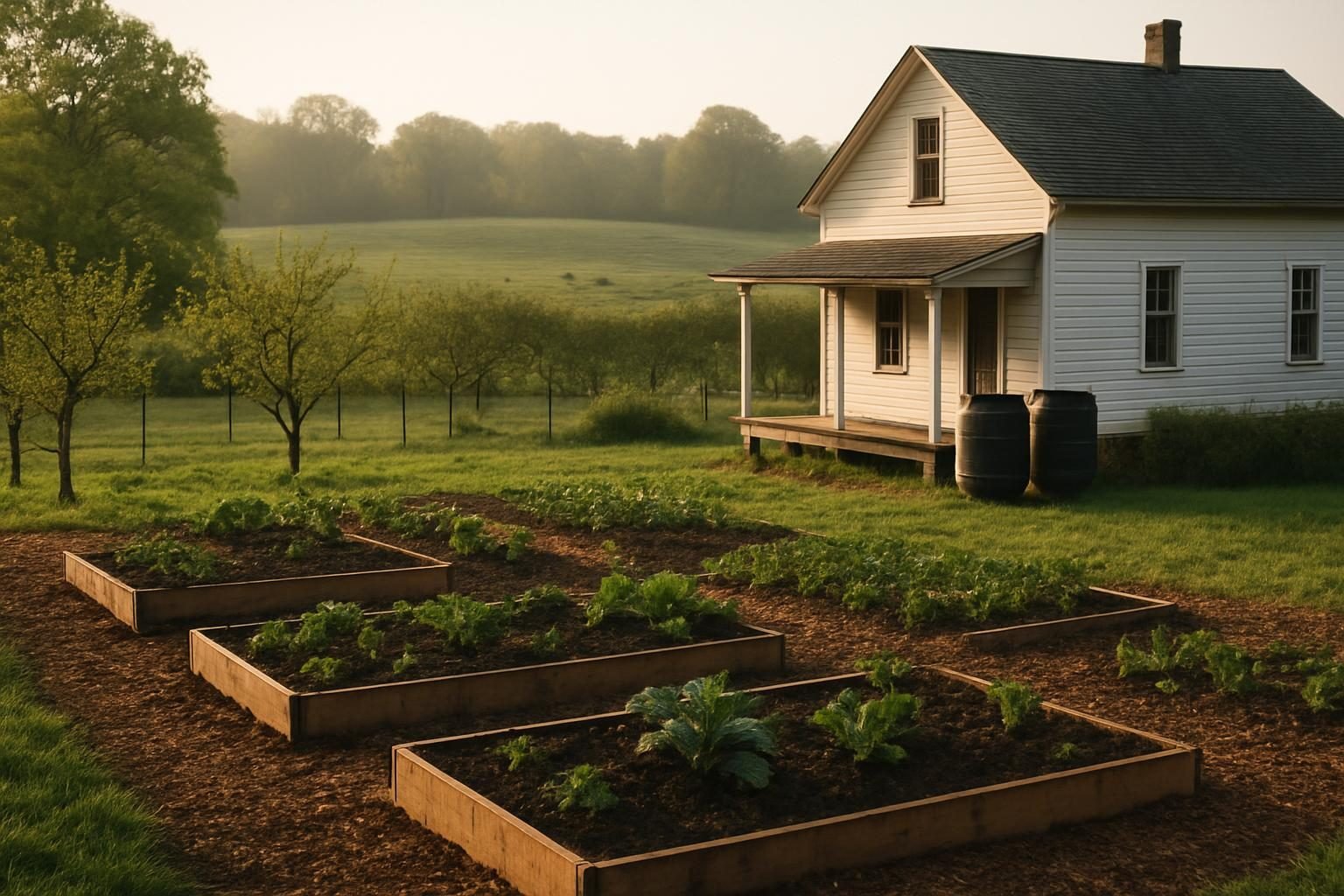
Raised beds are a closed system: whatever you put in the frame is what your crops live on, so the compost you choose matters more than it does in an in-ground garden. Get it right and you build rich, crumbly soil that holds moisture and feeds plants for years. Get it wrong and you import weeds, salts, or herbicide residues that take seasons to fix.
Quick answer: For new raised beds, mix roughly 25-40% finished compost into 60-75% topsoil or a bulk soil base, using more than one compost source if you can. For established beds, top-dress 1-2 inches of compost each fall or spring instead of mixing it in. Use only finished, weed-free compost, and ask suppliers about herbicide history before you buy manure or mushroom compost.
Why compost choice matters more in raised beds
In a field, roots can wander below the amended layer and soil biology has a deep reservoir to draw on. In a 10-to-12-inch-deep frame, plants are confined to what you built. A salty compost, an immature one that ties up nitrogen, or one carrying persistent herbicide can damage a whole bed’s worth of crops with nowhere to escape.
The upside is control. Because the volume is small, you can choose inputs carefully, test them, and rebuild fertility on a schedule. If you want the bigger picture of why organic matter and biology drive productivity, our complete guide to building living soil covers the principles behind everything in this article.
Types of compost for raised beds
No single compost is perfect. Each has strengths, weaknesses, and a few traps.
Homemade compost
Your own compost is the cheapest and most controllable option, and you know exactly what went into it. The limits are volume (a typical backyard system rarely produces enough to fill new beds) and consistency. If you are starting from scratch, see our practical guide to making compost, and if you want finished material in weeks rather than months, hot composting is the faster route. Hot piles that reach and hold roughly 130-160°F for several days also kill most weed seeds and pathogens.
Bagged and bulk municipal or commercial compost
Bagged compost is convenient for small beds. Bulk compost from a landscape supplier or municipal program is far cheaper per cubic yard if you are filling several beds. Quality varies widely, so ask for a lab analysis, and check what feedstocks are used. Some municipal composts include grass clippings or yard waste that could carry herbicide residue. Bagged products labeled for raised beds may be blends with soil or other ingredients, so read labels carefully. We compare options in more depth in our planned guide on bagged organic raised bed soils.
Mushroom compost
Spent mushroom substrate is usually made from composted straw, hay, and manure. It is often inexpensive and good at adding organic matter, but it can be high in soluble salts and sometimes has an alkaline pH. Use it as a portion of the mix (typically no more than about 10-25% by volume), avoid heavy applications for salt-sensitive seedlings, and be cautious if you grow acid-loving crops such as blueberries.
Manure-based compost
Composted cow, horse, sheep, or poultry manure adds nutrients, especially nitrogen and phosphorus. Poultry-based products are the strongest and can burn plants or build up phosphorus if overused. Fresh manure does not belong in a raised bed at planting time. Manure is also the most common carrier of persistent herbicide residue (see the quality checks below). If you keep birds yourself, backyard chickens can feed your own compost loop, provided you let the material finish properly.
| Compost type | Best for | Watch out for | Typical share of a bed mix |
|---|---|---|---|
| Homemade | Top-dressing, any bed | Limited volume, weed seeds if the pile stayed cool | Up to 100% of top-dressing |
| Bagged or bulk municipal | Filling new beds | Variable quality, possible herbicide in yard waste feedstocks | 25-40% |
| Mushroom | Cheap bulk organic matter | Salts, alkaline pH | 10-25% |
| Manure-based | Heavy feeders like squash and brassicas | Herbicide carryover, excess nutrients, salts | 10-25%, composted only |
A practical approach is to blend two or three sources. A mix of homemade and bulk compost, with a modest share of manure or mushroom compost, spreads risk and gives a wider range of nutrients and biology.
How much compost to mix in versus top-dress
Filling a new bed
A common range for a new bed is about 25-40% compost by volume, blended with 60-75% of a base such as screened topsoil, coarse sand where needed for drainage, or a lighter bulking material. More compost is not automatically better: beds that are over 50% compost often settle hard, can leach nutrients, and may run too rich or salty early on. The exact recipe depends on your soil and region, and our upcoming guide to raised bed soil mix recipes goes deeper. If you are tempted to fill beds with straight bagged potting product, read our planned comparison of potting mix versus garden soil in raised beds first.
Maintaining an established bed
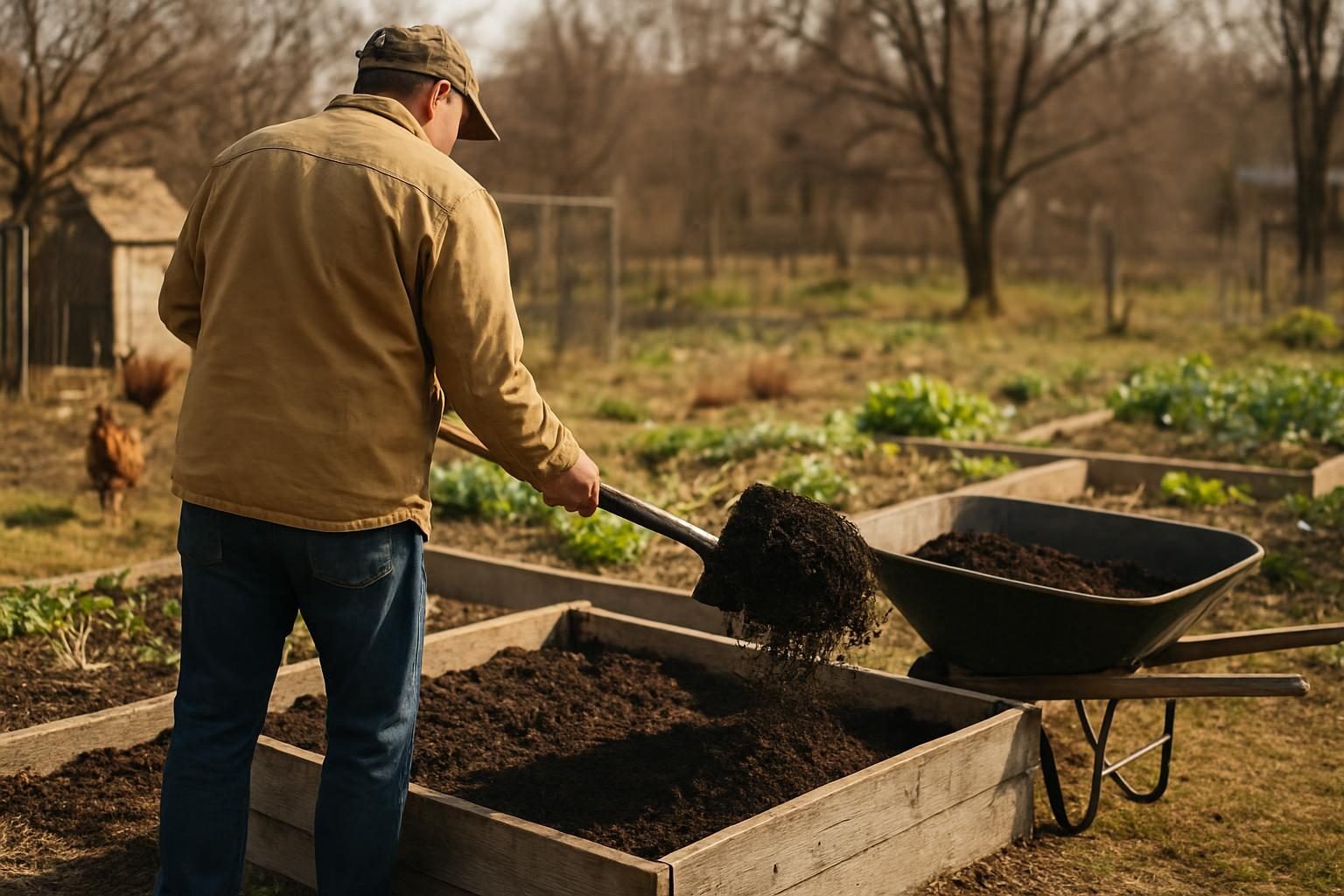
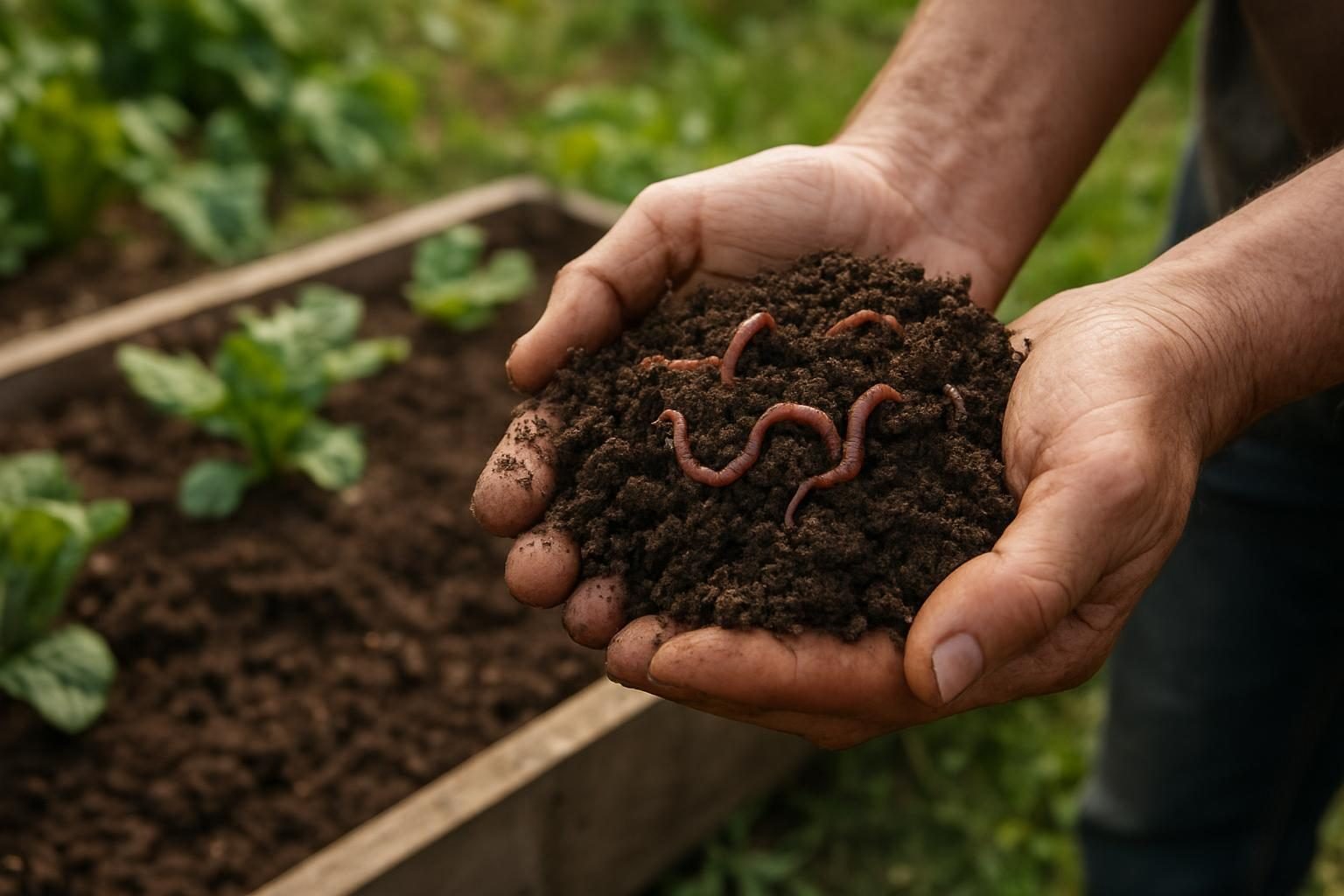
Once the bed is planted and the soil structure is established, stop digging compost in. Spread a 1-2 inch layer on the surface and let worms, fungi, and rain move it down. This is the core idea behind no-dig gardening, and it protects soil structure and fungal networks while still feeding crops. If you are new to the approach, our planned guide to starting a no till garden covers the setup.
Rough amounts by crop demand
- Heavy feeders (tomatoes, squash, corn, brassicas): about 1-2 inches of compost per season.
- Moderate feeders (lettuce, beets, onions): about 1 inch.
- Light feeders and nitrogen fixers (carrots, beans, peas, herbs): about ½ inch, or skip a year if soil tests are high.
To estimate volume, a 4 by 8 foot bed needs about 2.7 cubic feet of compost per inch of depth. Treat these as starting points and adjust with soil tests and what your plants tell you.
When to add compost: fall versus spring
Fall top-dressing lets compost settle and begin breaking down over winter, so nutrients are ready by spring. It works especially well in the humid East and South, where winter rain can leach exposed nutrients, so pair it with a cover crop or mulch rather than leaving compost bare.
Spring top-dressing is better in arid or very cold regions, and it is the right choice if you did not get to fall work. Apply 2-4 weeks before planting when you can, especially with manure-based compost, so it has time to stabilize.
Mid-season side-dressing of a thin layer around heavy feeders is a good supplement, but avoid piling compost against stems.
How to refresh beds each year: a simple routine
- Pull spent crops, leaving roots in the soil where practical.
- Check bed level. If soil has dropped more than 2-3 inches below the frame, top up with a blend of compost and base soil.
- Spread 1-2 inches of finished compost across the surface.
- Cover with mulch (straw, leaves, or wood chips for paths and perennials) or sow a winter cover crop.
- Test soil every 2-3 years through your state extension service or a reputable lab, and adjust your compost choices accordingly.
For a broader view on integrating beds into a productive layout, see our guide to small-scale regenerative farming.
Quality checks before you buy or spread
Is it finished?
Finished compost is dark, crumbly, and smells like forest soil. You should not be able to identify the original materials, and it should not feel hot. A simple bag test: seal a handful in a jar with a bit of moisture for a day or two. A sour or ammonia smell means it is not done. You can also run a seed germination test by sprouting radish or cress seeds in a compost-and-water mix, and comparing them to seeds in plain potting mix.
Is it weed-free?
Look for sprouting seedlings in a sample. A pile that stayed cool is likely to carry viable weed seeds. Ask suppliers whether their process includes a thermophilic phase, and be wary of bargain bulk compost with visible plant debris.
Is there herbicide carryover?
Some herbicides in the pyridine carboxylic acid family (such as aminopyralid, clopyralid, and picloram) can persist through composting and injure tomatoes, beans, peas, and other sensitive crops even at very low concentrations. Feedstock risk is highest with manure, hay, straw, or grass clippings from treated pastures and lawns. Ask suppliers directly about feedstock sources. For a bioassay, grow beans or peas in a pot of the compost mixed with potting mix, alongside a control pot. Twisted, cupped, or stunted growth in the compost pot is a red flag. Confirm current product labeling and guidance with your state extension service or department of agriculture.
Is the pH and salt level reasonable?
Ask for a lab analysis showing pH, soluble salts (electrical conductivity), and nutrient levels. Mushroom and poultry composts are the usual suspects for high salts. If you cannot get an analysis, use them in smaller proportions and water in well.
Related ways to feed the bed
Compost is one tool, not the whole toolbox. Cover crops, mulch, and worm castings all contribute, and our guide to vermicomposting shows how to make a small, high-quality amendment for top-dressing. If you are curious about brews and extracts, read what the evidence says in our piece on compost tea and biological amendments. You can also build your own bin, and our planned guide to how to make a compost bin will walk through simple designs. For city gardeners working in tight spaces, urban farming has more on sourcing and space-saving strategies, and you can browse more in our Small & Urban Farms category.
Key takeaways
- Aim for roughly 25-40% compost in a new raised bed mix, and avoid going above about 50%.
- Blend two or three compost sources to spread risk and broaden nutrients.
- Top-dress established beds with 1-2 inches of compost each fall or spring rather than digging it in.
- Only use finished, weed-free compost, and ask about herbicide history for manure, hay, and yard-waste feedstocks.
- Request a lab analysis for pH and soluble salts, especially with mushroom and poultry composts.
- Test your soil every 2-3 years and adjust your compost choices to match.
Frequently asked questions
Can I use 100% compost in a raised bed?
It is not recommended. Straight compost tends to settle, can hold too much water or too many salts, and is often too nutrient-rich for young plants. A blend of compost with topsoil or another structural base gives better drainage, root support, and long-term stability.
How often should I add compost to raised beds?
Most beds benefit from 1-2 inches of compost once or twice a year, typically in fall, spring, or both for heavy-feeding crops. Light feeders may need less. Soil tests every few years will tell you whether you are under- or over-applying.
Is mushroom compost good for vegetable gardens?
Yes, in moderation. It adds organic matter cheaply, but it can be salty and alkaline. Keep it to roughly 10-25% of a mix, blend it with other compost, and be cautious with salt-sensitive seedlings and acid-loving plants.
How do I know if compost has herbicide in it?
Ask your supplier about feedstock sources, then run a bioassay by growing beans or peas in the compost mixed with potting soil next to a control pot. Distorted, curled, or stunted growth suggests residue. Contact your state extension service for guidance on testing options.
Should I add compost in fall or spring?
Both work. Fall is ideal in wetter regions if you cover the soil, because it gives compost time to integrate. Spring works well in arid or cold climates and when you missed fall. Apply raw-feeling or manure-based compost at least a few weeks before planting.