Walk into any big-box garden center in April and you’ll face a wall of bags, all promising lush raised beds. Miracle-Gro organic raised bed soil is one of the most visible, so it’s a fair place to start, but the real question is what is actually in the bag and whether it’s worth the money for how you grow.
This guide compares popular bagged organic raised bed mixes by ingredients, texture, nutrient sources and cost per cubic foot, then sets them against bulk soil and a DIY blend. You’ll also learn how to read a label and when to amend.
Quick answer: Bagged organic raised bed mixes, including Miracle-Gro’s organic line, are convenient and usually fine for a first season or small beds. Most are peat or coir plus composted bark, with a modest amount of compost and a slow-release organic fertilizer. For anything over a few beds, bulk soil blended with compost is typically 50-80% cheaper per cubic foot and builds better long-term structure. Whichever you choose, plan to top up with compost every season.
What is actually in a bagged organic raised bed mix?
Nearly every product in this category is a soilless or low-soil blend. Mineral soil (sand, silt, clay) is often a small fraction or absent, which is why these mixes are light, fluffy and easy to pour. That’s a feature for drainage and root growth, but it affects how the mix behaves over time.
Common components you’ll see on labels:
- Sphagnum peat moss or coir: The water-holding backbone. Peat is acidic and a mined, slowly renewable resource; coir is a byproduct of coconut processing and is closer to neutral.
- Composted forest products (aged bark, wood fines): Add bulk and air space. Fresh or poorly composted wood can temporarily tie up nitrogen.
- Compost or composted manure: The real source of biology and slow nutrients. The percentage matters and is rarely stated.
- Perlite, pumice or sand: Drainage and aeration. Perlite is a mined, expanded volcanic glass, and it is allowed in organic mixes.
- Organic fertilizer inputs: Feather meal, bone meal, poultry manure, alfalfa meal, kelp or similar, giving a few weeks to a couple of months of feed.
- Lime: Added to buffer peat’s acidity toward the 6.0-7.0 range most vegetables prefer.
How to read the label
Labels reward a little skepticism. Here’s what to check before you buy.
- Ingredient order. Ingredients are generally listed by volume or weight, heaviest first. If peat or bark leads and compost sits near the end, you are mostly buying a potting-style base, not a living soil.
- “Organic” wording. “Organic” on the front can mean the product is OMRI-listed or certified for organic production, or it can simply mean the ingredients are organic in origin. Look for an OMRI or equivalent seal if you farm under organic certification, and confirm current requirements with your certifier.
- Feed claims. “Feeds for up to 3 months” refers to the added fertilizer and varies with temperature, moisture and crop. Heavy feeders like tomatoes, squash and corn will usually outrun it.
- Volume, not weight. Bags are sold in quarts or cubic feet. Check the actual size, since 1.5, 2 and 2.5 cubic foot bags sit side by side on the shelf and change the real price.
- Soil vs. potting mix language. Some bags are really container mixes. If you’re unsure which to use in a bed, see our guide to potting mix for a raised garden bed.
Bagged organic raised bed mixes compared
Brands reformulate often and regional blends differ, so treat this as a framework for comparing the bags on your local shelf rather than a spec sheet. Always verify the current label.
| Mix type | Typical base | Texture | Nutrient source | Typical cost per cubic foot* |
|---|---|---|---|---|
| Miracle-Gro-style organic raised bed mix | Peat or coir, composted bark, some compost | Light, fluffy, high water-holding | Added organic fertilizer, short-term feed | Mid range for bagged |
| Premium organic raised bed mix (specialty brands) | Compost-forward, with bark or coir and perlite | Fluffy to moderately dense | Higher compost fraction plus amendments | Mid to high range |
| Basic “garden soil” bags | Topsoil or bark fines, sometimes compost | Denser, can compact | Often minimal | Lower end of bagged |
| Bulk raised bed mix (soil and compost blend) | Screened topsoil plus compost, sometimes sand or bark | Varies by supplier; closest to real soil | Compost | Often a fraction of bagged |
| DIY blend | Your choice: compost, topsoil, coir or bark, aeration | You control it | Compost plus amendments you pick | Depends on sourcing, usually lowest |
*Prices vary widely by region, season and retailer. Divide the bag price by its cubic-foot volume to compare. Bagged mixes commonly cost several times more per cubic foot than bulk.
The pattern holds across brands. Bagged mixes are consistent, clean and easy to carry. They are also the most expensive way to fill a bed, and the peat-heavy ones can dry out and repel water if they’re allowed to get bone dry.
Bagged vs. bulk vs. DIY: which should you choose?
Choose bagged when
- You’re filling one to three small beds, or a few containers.
- You have no truck, no loader access or no nearby supplier.
- You want a predictable, weed-seed-free start for a first season.
Choose bulk when
- You’re filling several beds or a market garden. A standard 4 x 8 foot bed that is 12 inches deep holds 32 cubic feet, which can mean 16 or more bags.
- A local landscape supplier will sell a screened blend by the cubic yard (27 cubic feet). Ask what’s in it and where the compost comes from, and avoid anything with a strong sour or ammonia smell.
- You can accept some variability in exchange for real savings and more mineral soil.
Choose DIY when
- You want control over structure and fertility, or you make your own compost.
- You want to match the mix to your climate: more water retention in the arid West, more drainage in the humid East and South.
Our raised bed soil mix recipes walk through blends that hold up for years, and the logic is the same one that drives good soil health everywhere: mineral particles, organic matter and living biology working together.
When and how to amend a bagged mix
Even a good bag is a starting point. Here is a practical routine.
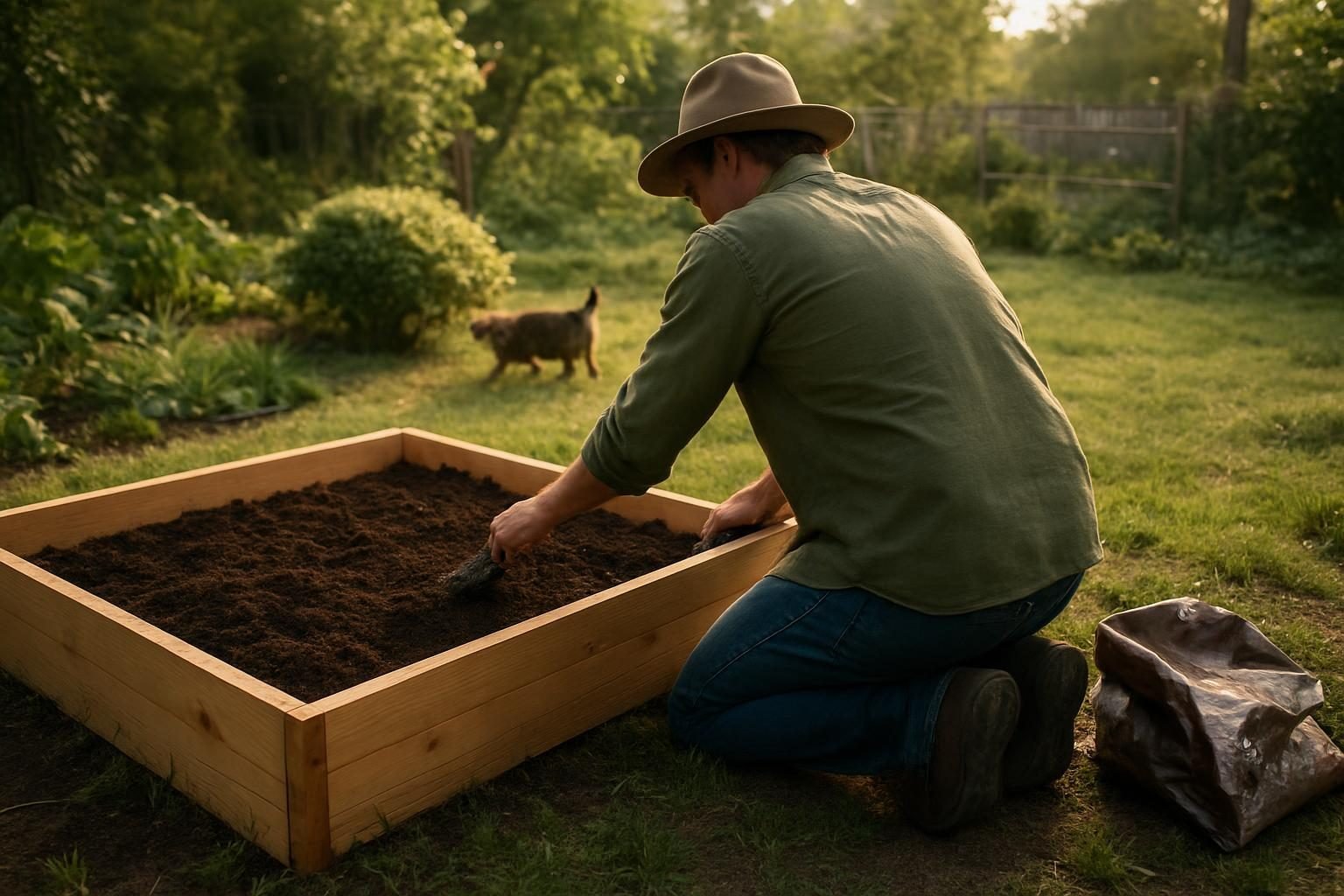
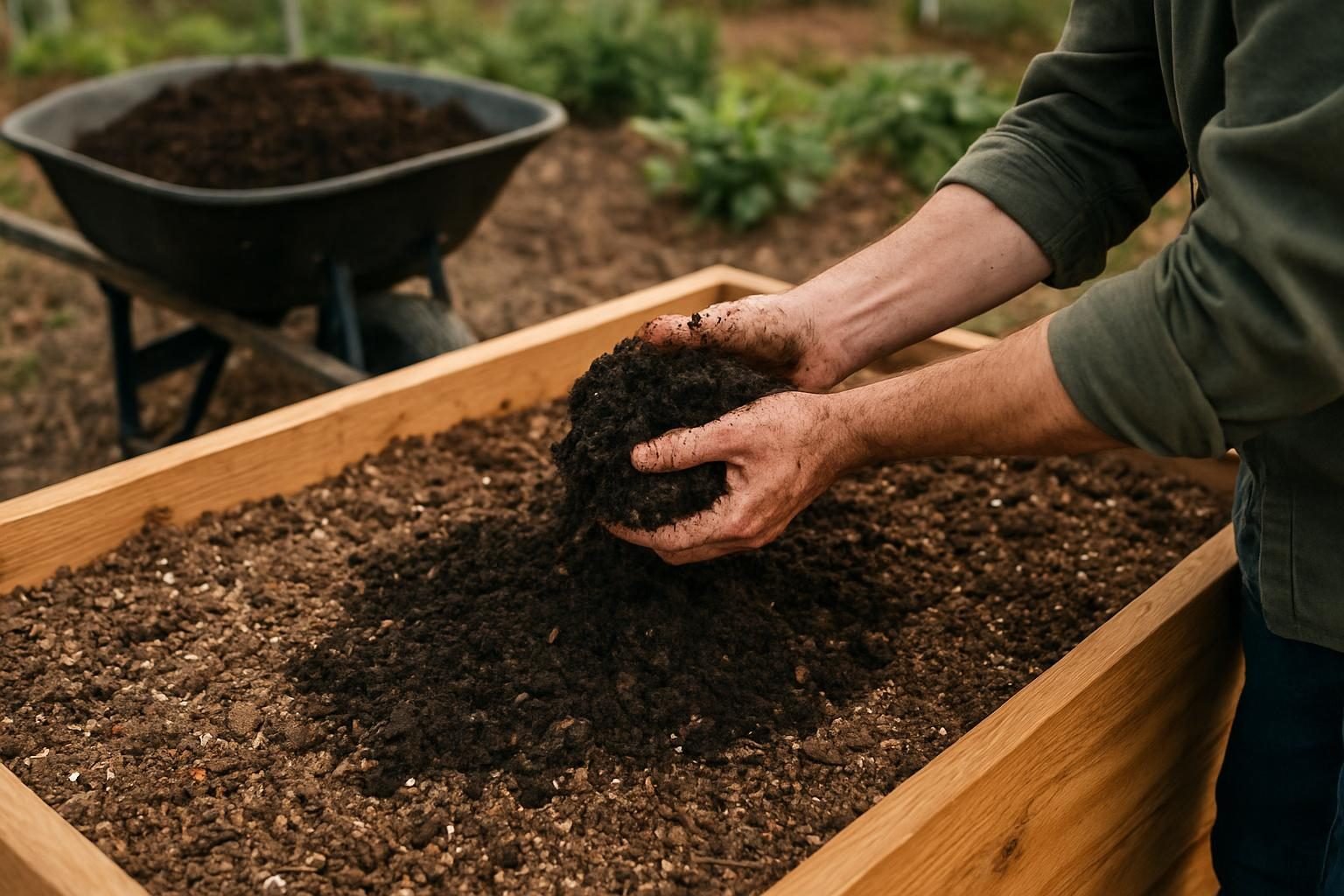
- Blend before planting. Dump bags into the bed and fork in 20-30% finished compost if the mix looks like mostly peat and bark. It adds biology and slow-release nutrients.
- Wet it thoroughly. Peat-heavy mixes can be hydrophobic when dry. Water slowly in stages, and mix by hand if water runs off instead of soaking in.
- Test, don’t guess. A basic soil test from your state extension service shows pH, organic matter and major nutrients. Mixes behave differently from field soil, so ask the lab how to interpret results for a soilless blend.
- Side-dress heavy feeders. Around week 4-6, add compost or an organic nitrogen source (feather or alfalfa meal, following label rates) for tomatoes, peppers, squash and brassicas.
- Top up every season. Bagged mixes lose volume as organic matter breaks down. Add 1-2 inches of compost each year. See compost for raised beds for ratios and timing.
Common amendments and what they do:
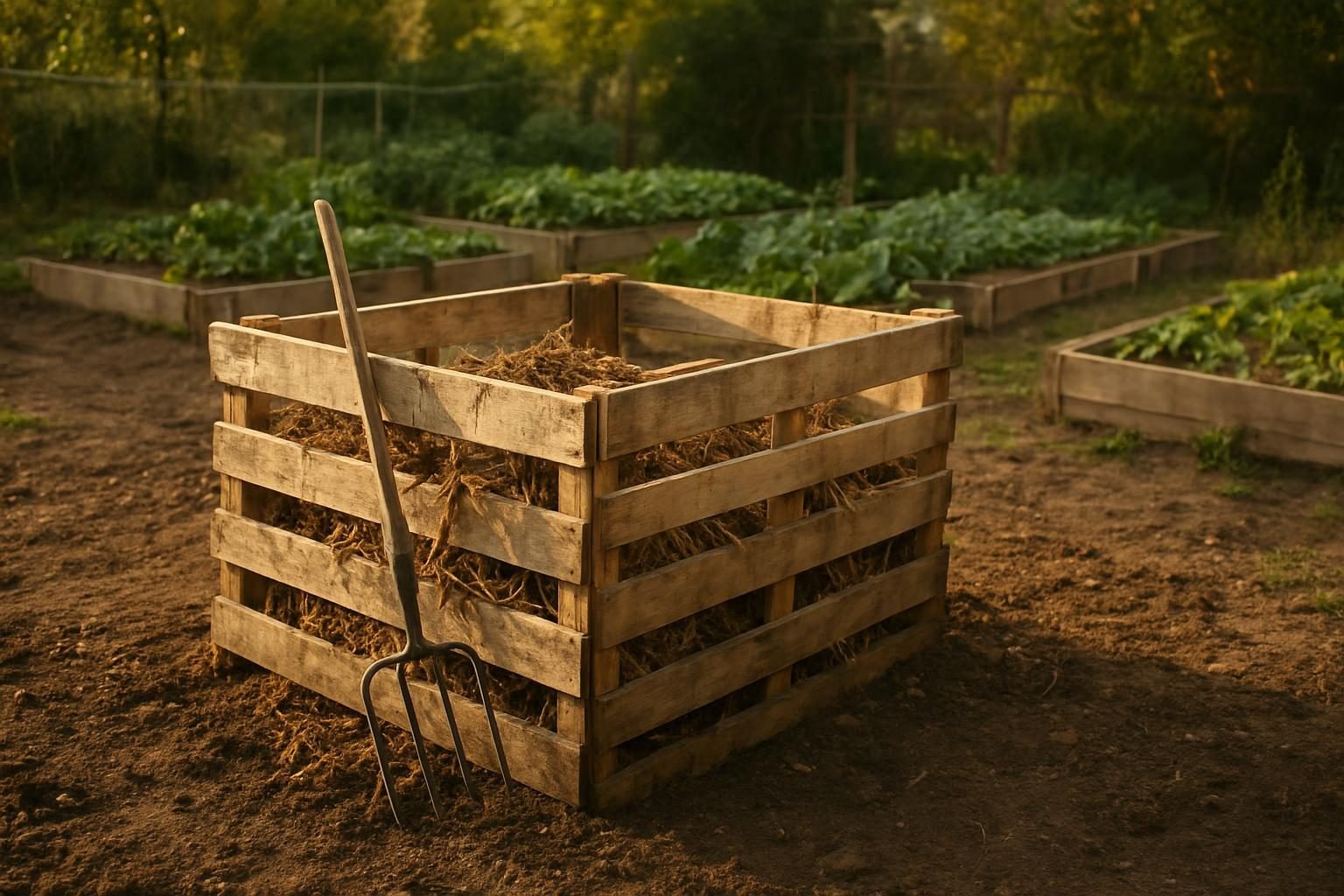
- Finished compost: biology, nutrients, structure. The single best addition. If you don’t have your own, learn how to make compost, and consider how to make a compost bin to get started cheaply.
- Worm castings: a gentle fertility boost; vermicomposting produces them at home.
- Biochar (charged with compost): can improve water and nutrient retention in light mixes, with limits. See our biochar guide.
- Garden lime or sulfur: only if a test shows pH is off.
Cutting costs and filling big beds
Filling deep beds is where the bill balloons. Two strategies help. First, build in layers: coarse woody material at the bottom (a technique related to hugelkultur) reduces the volume of purchased soil, though the wood will settle and tie up nitrogen for a time. Second, consider a shallower bed over cardboard, which pairs well with no-till gardening and no-dig bed building.
If you run beds as part of a bigger operation, the same economics apply at scale. Our small-scale regenerative farming guide and the Small & Urban Farms category cover how growers keep input costs sane.
Key takeaways
- Most bagged organic raised bed mixes, including Miracle-Gro’s, are peat or coir plus bark and a little compost, with short-term organic fertilizer.
- Read ingredient order, the “organic” claim and the true bag volume, and compare on cost per cubic foot.
- Bagged mixes suit small beds and first seasons; bulk blends or DIY win on cost for larger projects.
- Blend in finished compost, water thoroughly, soil test and side-dress heavy feeders.
- Top up with compost every year as the mix settles and breaks down.
Frequently asked questions
Is Miracle-Gro organic raised bed soil good enough to fill a whole bed?
It can work for a season, especially in small beds, but it is largely a light peat or coir and bark blend. For a full bed, many gardeners mix bagged soil with extra compost or part bulk topsoil to add mineral content, water-holding stability and biology, and to cut the cost.
How many bags do I need for a raised bed?
Multiply length x width x depth in feet to get cubic feet. A 4 x 8 foot bed that is 1 foot deep needs about 32 cubic feet, roughly 16 bags of the 2 cubic foot size. Expect the mix to settle, so buy or order a little extra.
Do I need to add fertilizer to bagged organic raised bed soil?
Usually yes, eventually. The built-in feed typically lasts weeks, not the whole season, and varies with weather and crop. Add compost at planting and side-dress hungry crops partway through the season, guided by a soil test.
Can I reuse bagged raised bed soil next year?
Yes. Fluff it, remove roots and debris, and top up with 1-2 inches of compost. Rotate crops, and discard or hot-compost any material from diseased plants rather than reusing it as is.
Is bulk soil cheaper than bagged raised bed soil?
Almost always per cubic foot, often by a wide margin, once you account for delivery. Quality varies by supplier, so ask about ingredients, screening and compost source, and look at the pile before you buy.