Biochar gets pitched as a miracle soil fix, and the reality is more interesting and more modest. It is a stable, porous carbon material that can help certain soils, in certain situations, when it is prepared and applied correctly. This guide covers what biochar is, what the evidence says, and how to decide whether it earns a place on your farm or in your garden.
Quick answer: Biochar is charcoal made by heating plant material with little or no oxygen (pyrolysis). It persists in soil for centuries, holds water and nutrients, and can raise yields on acidic, sandy or degraded soils, but results on healthy, high-organic-matter soils are often small or zero. Always charge it with compost, manure or nutrient solution before applying, because raw biochar can temporarily tie up nutrients. Typical rates run from about 1 to 10 percent by volume in gardens and from a few tons per acre on farm fields. Test on a small area first.
What biochar is (and what it is not)
Biochar is the solid, carbon-rich material left when biomass such as wood chips, nut shells, crop residue or manure is heated to roughly 350 to 700 degrees Celsius with very little oxygen. The process, called pyrolysis, drives off gases and leaves a porous skeleton of carbon. That structure is the whole point: it is full of microscopic pores and surface area, and it resists decomposition far longer than the raw feedstock would.
It is not the same as the ash from a burn pile, and it is not the same as the lump charcoal or briquettes sold for grilling (those can carry binders and additives you do not want in soil). It is also not a fertilizer. Think of it as a durable habitat and sponge, not a feed.
Properties vary widely depending on feedstock and temperature. Wood biochar made at high temperature tends to be very stable with high pH and low nutrients. Manure or poultry litter biochar carries more nutrients and salts. This variability is why one farmer’s great result and another’s flop can both be real.
What the evidence says about yields
Peer-reviewed reviews and meta-analyses generally find that biochar can increase crop yields on average, but the effect is highly uneven. The pattern is fairly consistent across the literature:
- Acidic, weathered soils (much of the humid East and Southeast) often respond best, partly because many biochars act as a liming agent and raise pH.
- Sandy, low-organic-matter soils can see gains from improved water and nutrient retention.
- Healthy, high-organic-matter, near-neutral soils (much of the Corn Belt) frequently show little or no yield response.
- Alkaline, calcareous soils (common in the arid West) can be pushed the wrong way if you add a high-pH biochar.
In other words, biochar tends to fix specific limitations rather than boost soils that are already working. Before you buy anything, find out what limits your soil. A proper soil test tells you pH, organic matter and nutrient status, and that is the best predictor of whether biochar will pay off.
The carbon question: real, but not a free pass
Because biochar is so stable, it is one of the more durable ways to store carbon in soil. Carbon locked in the char form can persist for decades to centuries, far longer than most carbon added through plant residues. That is a genuine benefit.
The caveat is the full accounting. The climate value depends on the feedstock (waste biomass that would otherwise rot or burn is far better than wood harvested just to make char), the energy used in production, how much smoke and methane escape during a sloppy burn, and transport distance. A clean, well-run kiln is a very different thing from an open pile. Be skeptical of any seller promising precise carbon credits or guaranteed offsets without third-party verification, and confirm current standards and eligibility with the relevant program or registry before counting on revenue.
For building soil carbon over time, biochar is a supplement, not a substitute, for the basics covered in our guide to increasing soil organic matter: living roots, diverse residues, and less disturbance.
Why you must charge biochar first
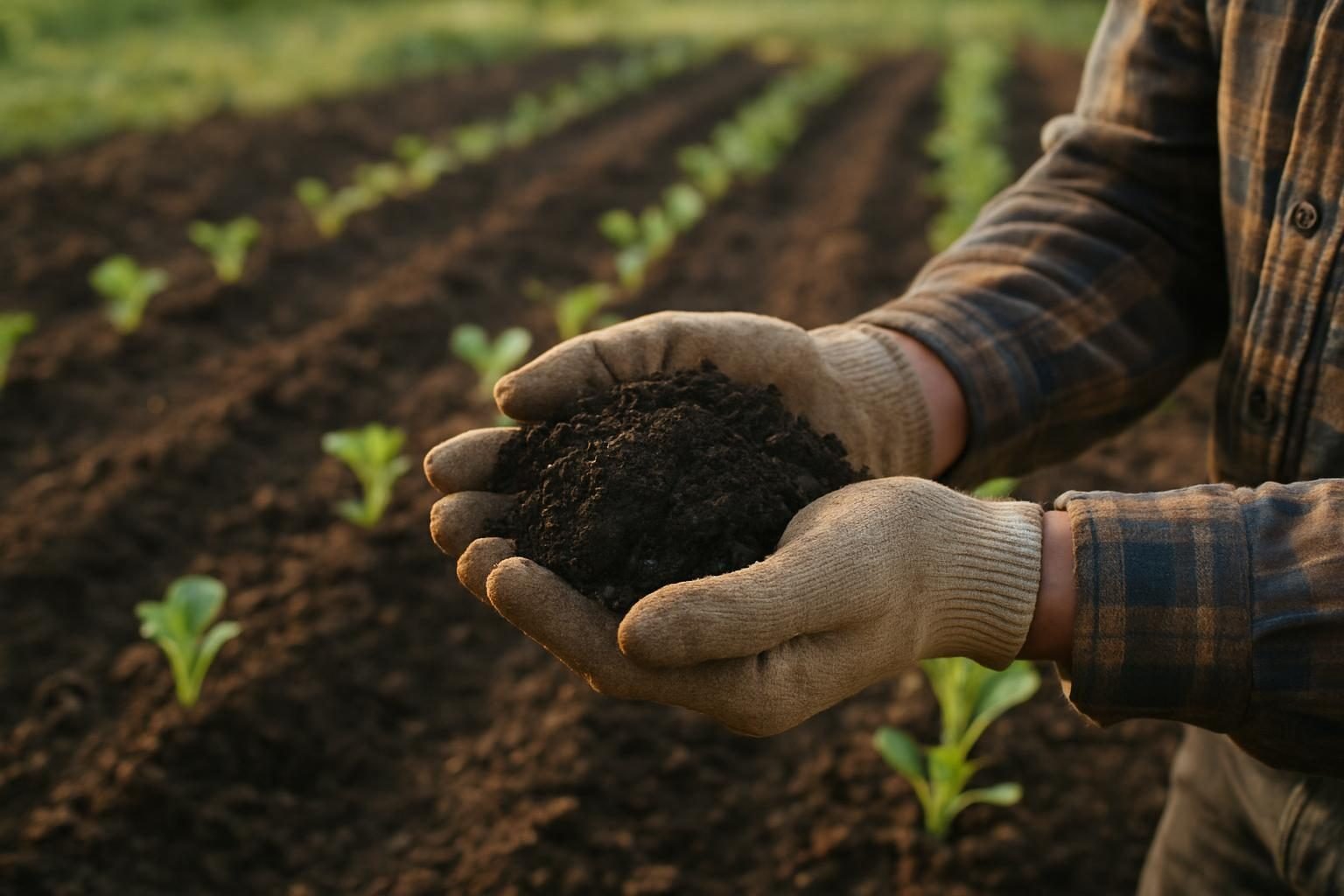
Fresh biochar is like a dry sponge with an appetite. Its pores are empty, and when you mix it into soil it can adsorb nutrients, particularly nitrogen, from the surrounding soil solution. Applied raw, it can briefly compete with your crop and cause a stunted, yellowing start. Charging fixes this by filling those pores with nutrients and microbes before the biochar ever meets your field.
How to charge biochar
- Crush it. Break biochar into pieces roughly pea-size to marble-size. Very fine dust is a nuisance to apply and a respiratory irritant, so wet it and wear a dust mask.
- Soak it. Wet the biochar thoroughly. It floats and resists water at first, so stirring and a day or two of soaking helps.
- Mix with a nutrient source. Blend with finished compost, aged manure, worm castings, or a dilute organic fertilizer or compost extract. A common starting mix is about equal parts biochar and compost by volume.
- Let it sit. Give the mix two to four weeks, kept moist, so nutrients and microbes can move into the pores.
- Apply and incorporate. Spread it, then lightly work it into the top few inches or topdress and water in.
The easiest path for most people is to blend biochar into the compost pile itself. If you are new to that, start with our guide on how to make compost. Co-composting with biochar is widely reported to reduce odor and nutrient loss, and it does the charging for you.
Application rates: typical ranges
There is no universal rate. Use these as starting ranges, and confirm with your local extension service, since soil type, biochar properties and crop all matter.
| Use | Typical starting range | Notes |
|---|---|---|
| Garden beds and raised beds | About 5 to 10 percent by volume, blended into the top 4 to 6 inches | Start low; build up over seasons |
| Potting mixes and containers | About 5 to 10 percent by volume | Use charged biochar only |
| Field crops | Commonly a few tons per acre in trials | Economics are often the limiting factor |
| Pasture topdress | Small amounts, often paired with manure or compost | Trial a paddock first |
| Livestock bedding or feed additive | Follow supplier and veterinary guidance | Then compost the used bedding |
More is not better. Heavy single applications can raise pH more than you want and are hard to undo, because biochar does not break down. If you are working in raised beds, see our notes on compost for raised beds for how amendments layer together.
Make it yourself or buy it?
Making biochar on the farm
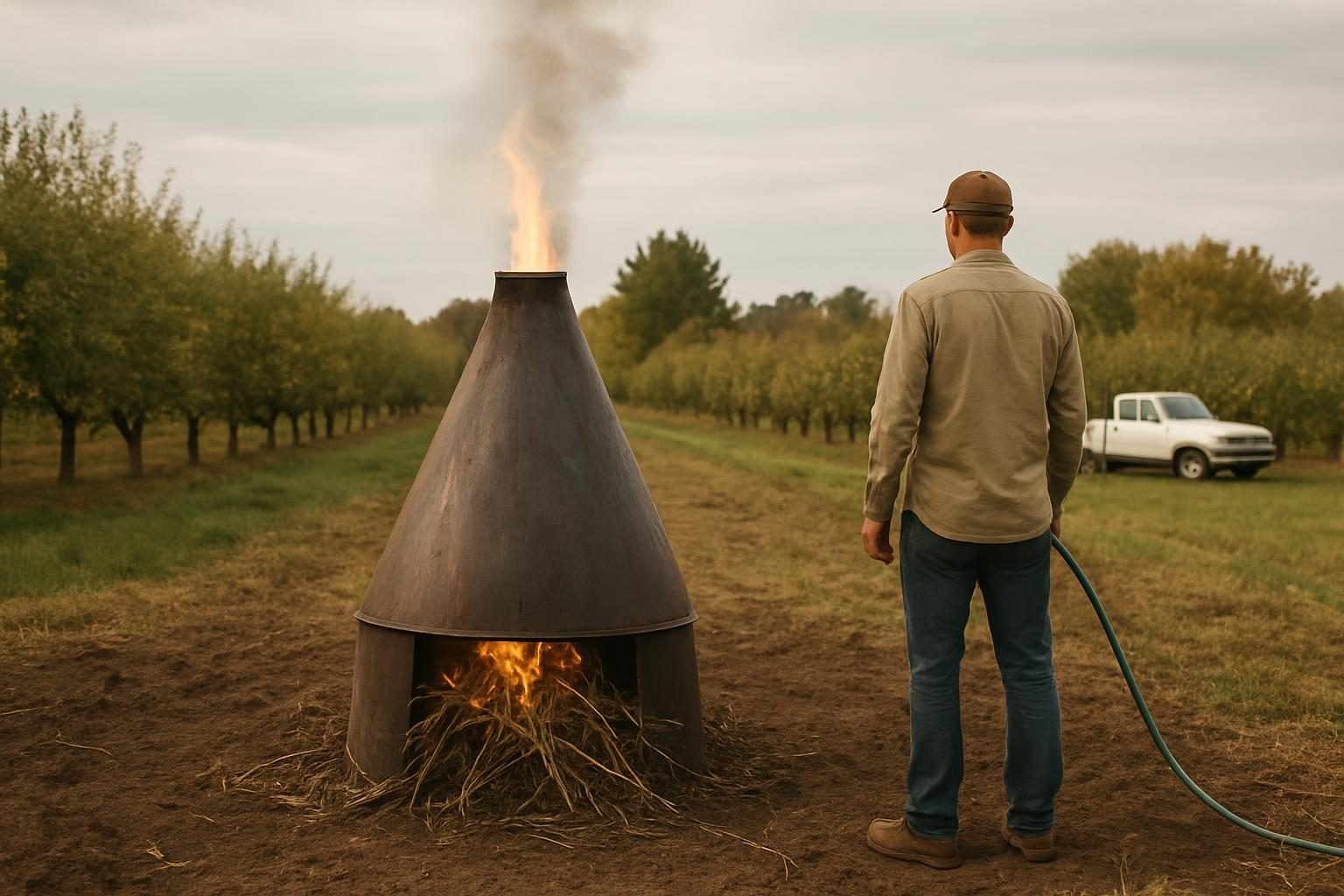
A cone kiln, flame cap pit or small retort lets you turn brush, orchard prunings, forest thinnings or crop residue into char. Done well, you get cheap biochar and a use for waste wood. The trade-offs are real: it takes labor, there is a learning curve, and a poor burn makes smoke and low-quality char. Check local burn rules and fire restrictions first, and never leave a kiln unattended. Quench the char fully with water or by smothering before you move it.
Buying biochar
Commercial biochar saves time and gives you a more consistent product, but prices vary a lot and bulk shipping can overwhelm the benefit on large acreage. Ask any seller for the feedstock, production temperature, pH, and whether it has lab analysis. Reputable products are often tested against recognized industry standards. We cover quality checks in more detail in our guide to buying biochar. Also confirm that anything you buy is suitable for use on food crops, and check with your certifier if you are organic.
A practical rule: for a market garden or small farm, buying or making a modest amount and trialing it is sensible. For hundreds of acres, the per-acre cost usually demands a clear, measured problem that biochar solves.
Honest limits and when to skip it
Biochar is a tool, and it is easy to oversell. Keep these limits in mind:
- It will not rescue poor management. Compaction, bare soil and low biology are better addressed through compaction fixes, cover crops and reduced disturbance.
- It is not a fast fix. Benefits often build over multiple seasons and may be invisible in year one.
- It can backfire on high-pH soils or if applied uncharged.
- The cost can outrun the return on low-value field crops, especially at distance from a source.
- Claims on microbial and fungal boosts are real in some studies but inconsistent. Biochar provides habitat; it does not guarantee a thriving soil microbiome.
If your soil is already dark, crumbly and productive, your money is probably better spent on cover crops and diversity. Start with cover crops for beginners and the broader picture in our complete guide to soil health.
A sensible way to trial biochar
- Test your soil so you know pH, organic matter and nutrient levels.
- Set aside a test strip or a few beds and leave an untreated control right next to it.
- Charge the biochar and apply at a modest rate.
- Keep the same crop, fertility and irrigation on both areas.
- Compare yield, vigor and water behavior over two or three seasons before scaling up.
This small, measured approach is consistent with what soil health work is really about: observe, test, and let your own ground tell you what works.
Key takeaways
- Biochar is stable, porous carbon that improves water and nutrient retention, mainly on acidic, sandy or degraded soils.
- Yield gains are real on average but uneven; healthy soils often show little response.
- Carbon storage is durable, but the climate benefit depends on feedstock and a clean burn.
- Always charge biochar with compost, manure or nutrients before applying.
- Start low, trial against a control, and confirm rates with local extension.
- Cover crops, diversity and reduced disturbance usually come first.
For more on the foundations, browse everything in our Soil Health category.
Frequently asked questions
Is biochar the same as charcoal?
They are made in similar ways, but biochar is produced specifically for soil use from clean biomass. Grilling charcoal and briquettes may contain binders, accelerants or other additives that do not belong in soil, so do not substitute them.
How long does biochar last in soil?
Well-made biochar is highly resistant to decomposition and is generally reported to persist for decades to centuries. That durability is why it is attractive for long-term carbon storage, and also why you should not overapply it.
Can I use biochar without composting it first?
You can, but it is not advised. Raw biochar can temporarily bind nutrients, especially nitrogen, and stunt early crop growth. Charge it with compost, manure or a nutrient solution for a few weeks before use, or mix it into your compost pile.
Does biochar work in every soil?
No. It tends to help acidic, sandy and low-organic-matter soils most. On healthy, high-organic-matter or alkaline soils the response is often small or negative. A soil test and a side-by-side trial will tell you more than any general claim.
Is it worth making biochar myself?
It can be, if you have a steady supply of waste wood or residue and the time to burn cleanly and safely. Check local burn regulations first. If you only need a small amount, buying a tested product may be simpler.