Farm equipment financing is where a lot of good regenerative operations quietly get into trouble. A tractor payment doesn’t care about a dry summer, a slow market season or a pasture that is still recovering. This guide walks through the main ways to pay for machinery, what lenders want to see, and how to decide whether to buy, lease, buy used or simply hire the job out.
Quick answer: For most small and mid-size farms, the best financing is the smallest amount that gets the job done. Compare a conventional equipment loan, a lease, dealer financing and FSA loans on total cost, not just the monthly payment. Buy used when the machine is simple and parts are available, lease when the equipment changes fast or you only need it seasonally, and hire custom operators for jobs you do once or twice a year. Confirm current rates, terms and eligibility with each lender or your local FSA office.
Start with the job, not the machine
Before you look at a single financing offer, write down what the equipment actually has to do and how many hours a year it will do it. A tractor that mows, moves bales and loads compost for 150 hours a year is a very different purchase than one that works 40 hours.
Regenerative systems often need less iron than conventional ones. Adaptive grazing replaces a lot of hay-making and feeding, and no-till and cover-crop systems cut tillage passes. If you’re moving toward rotational grazing, your biggest capital needs may be fencing, water and a reliable utility vehicle, not a bigger tractor. Many small growers do the same with hand tools and a walk-behind tractor, as covered in small-scale regenerative farming.
A quick needs test
- List every task the machine would do in a year and roughly how many hours each takes.
- Price what it would cost to hire each task done, or to borrow or rent the machine.
- Estimate the real annual cost of owning it: payment, insurance, fuel, repairs, storage and depreciation.
- Only buy if ownership clearly beats the alternatives and the farm’s cash flow can carry it in a bad year.
The main ways to finance equipment
Equipment loans
A traditional equipment loan from a bank, credit union or ag lender uses the machine as collateral. You own it from day one, build equity, and can deduct interest and, in many cases, depreciation (ask your tax professional how that applies to you). Terms are typically tied to the useful life of the equipment, often a few years for small gear and longer for large machines, and lenders commonly want a down payment. Ranges vary widely by lender, credit and market conditions, so get several quotes.
Leases
A lease lowers the upfront cost and can keep payments predictable, which suits technology-heavy or fast-changing equipment. The trade-offs: you may face hour or condition limits, and you may not own anything at the end. Read whether the lease is a true lease or a lease-to-own arrangement, since the economics and tax treatment differ. Again, check the details with your accountant.
Dealer financing
Manufacturers and dealers often advertise promotional rates or cash-back offers. These can be genuinely good, but compare them against a bank quote. A low rate sometimes replaces a rebate you’d otherwise get, or comes with a higher purchase price. Ask for the out-the-door price both ways and compare total cost over the full term.
FSA and Farm Credit options
The USDA Farm Service Agency offers direct and guaranteed farm ownership and operating loans, and operating loans can often be used for equipment. Programs for beginning and underserved farmers may offer favorable terms, though eligibility, limits and rates change, so confirm current details with your county FSA office. Our guides to farm loans for beginning farmers and how Farm Credit lenders work cover those pathways in more depth. Farm Credit associations are borrower-owned lenders that understand agriculture and often know local seasonal cash flow well.
Side-by-side comparison
| Option | Upfront cost | Ownership | Best for | Watch out for |
|---|---|---|---|---|
| Equipment loan | Usually a down payment | You own it | Long-lived, core machines | Payments continue in bad years |
| Lease | Low | Usually no, unless lease-to-own | Seasonal or fast-changing gear | Hour limits, end-of-term costs |
| Dealer financing | Varies | You own it | Promotional rates on new gear | Inflated price or lost rebates |
| FSA loan | Varies by program | You own it | Beginning or underserved farmers, those who don’t qualify elsewhere | Paperwork and processing time |
| Cash or savings | Full price | You own it | Small, used purchases | Draining operating cash |
What lenders typically require
Lenders want to see that the farm can repay the loan without heroic assumptions. Expect to provide some or all of the following:
- A business plan or at least a clear description of what you produce, how you sell and how the machine fits. Our farm business plan template is a good starting point.
- Financial statements: balance sheet, income and expense records, and often tax returns for a few years.
- Cash flow projections that show seasonal highs and lows, not just a yearly average.
- Credit history and a down payment or other collateral.
- Quotes or a purchase order for the specific equipment.
New farms without much history can struggle with this. That’s where documented sales, preorders and realistic pricing help. If you haven’t nailed your numbers yet, work through how to price farm products before you borrow against revenue you haven’t proven.
New, used or custom hire?
Buying used
For most small regenerative operations, used is the sensible default. Older, simpler machines with fewer electronics are often easier and cheaper to repair, and they hold their value better than new ones, which depreciate fastest in the first years. Before buying:
- Check that parts and local service are available for that make and model.
- Inspect the machine yourself or hire a mechanic: hydraulics, PTO, clutch, tires, leaks, hours and maintenance records.
- Compare prices on several listings, including auctions and dealer trade-ins, and factor in transport.
- Budget a repair reserve in the first year.
Used gear also costs less to finance, so a smaller loan or even cash may cover it.
Buying new
New makes sense when you’ll use the machine heavily, need warranty protection, or want specific safety and efficiency features. If you borrow for new equipment, make sure revenue clearly supports the payment and that you’ve compared total cost, not just the monthly figure.
Custom hire and sharing
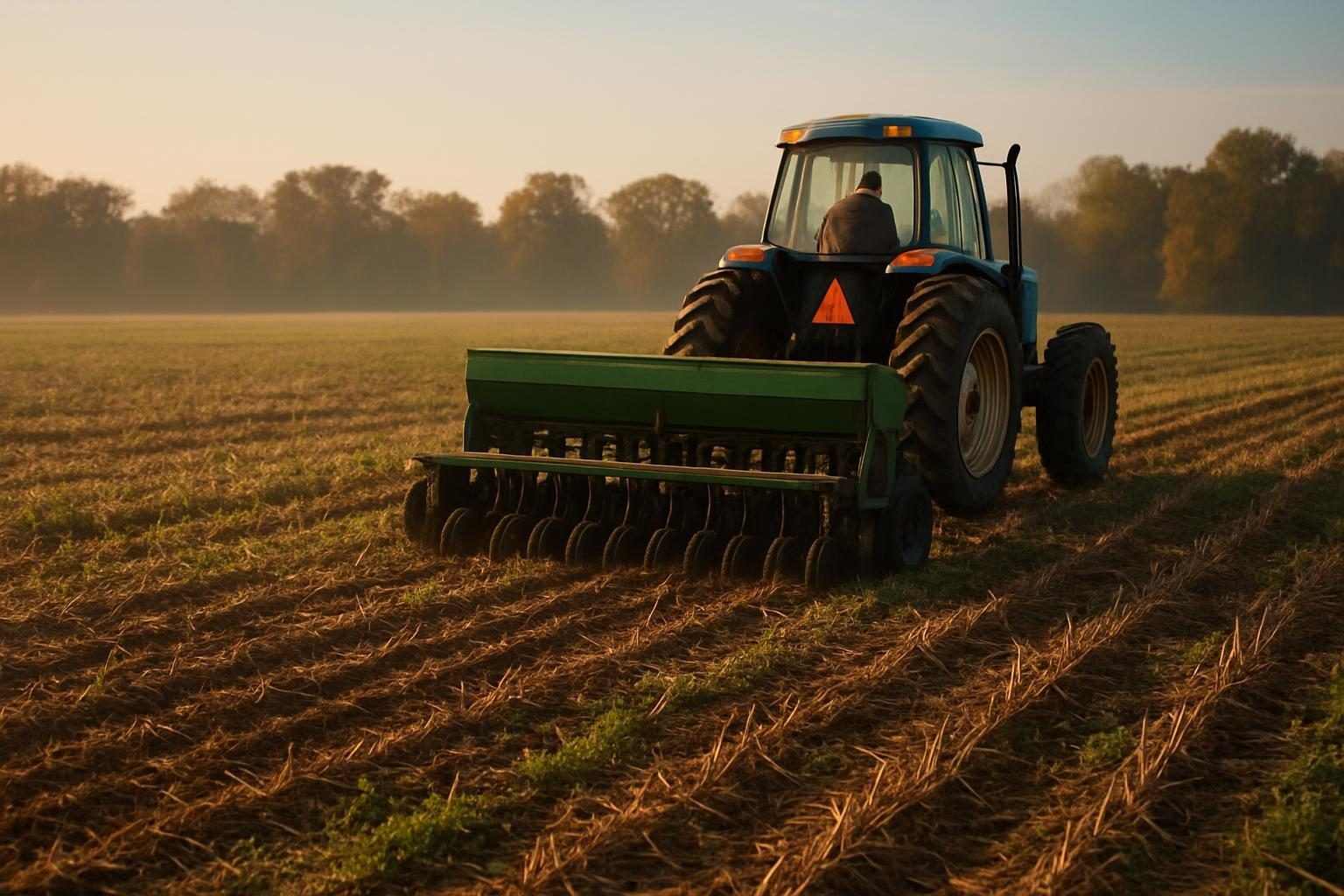
Custom operators can handle seeding, baling, manure spreading, compost hauling, fence-line clearing or hay cutting at a per-acre or per-hour price. Renting from a neighbor, a co-op or an extension or conservation district equipment program (many rent specialized no-till drills) can also beat ownership for jobs you do once or twice a year. A shared machine with clear written agreements about maintenance, scheduling and liability is another option. The rule of thumb: if you won’t use it enough to justify the real annual cost, don’t own it.
How to avoid over-capitalizing a small farm
Equipment is the classic way for a promising farm to bury itself in fixed costs. A few guardrails help:
- Buy tools that pay for themselves. A machine that saves labor on a revenue-producing enterprise beats one that merely feels productive.
- Stage purchases. Start with rented or used equipment, learn what you actually use, then upgrade.
- Stress-test the payment. Ask whether you could still make it after a drought, a bad market season or a livestock loss.
- Prioritize soil and infrastructure first. Fencing, water and fertility often return more per dollar than horsepower. The guide to starting a small farm with little money goes deeper on this.
- Look for cost-share. Programs such as EQIP sometimes support practices and some equipment tied to conservation goals. Eligibility and funding vary by state, so ask your local NRCS office. See also farm grants for beginning farmers.
- Grow revenue alongside gear. Adding value-added farm products or improving farm stand sales can support equipment costs without piling on debt.
For the broader funding picture, from loans to certification to sales channels, see our overview of the regenerative farming business, and browse the full Farm Business & Funding category.
Key takeaways
- Define the job and the annual hours before you shop for financing.
- Compare loans, leases, dealer offers and FSA options on total cost and risk, not monthly payment alone.
- Lenders want clear financials, realistic cash flow and a purpose for the machine.
- Used, simple equipment and custom hire often beat new purchases on small farms.
- Stage purchases, protect cash flow, and invest in soil, water and fencing before big iron.
- Confirm current rates, terms and program rules with lenders and agencies, and talk to a tax professional about deductions.
Frequently asked questions
Is it better to lease or buy farm equipment?
It depends on use and cash flow. Buying usually makes more sense for core machines you’ll keep for many years. Leasing can fit seasonal needs or technology that changes quickly. Compare total cost over the full term, including end-of-lease obligations, and ask your accountant about tax treatment.
Can I use an FSA loan to buy a tractor?
FSA operating loans can often be used for equipment, and some programs target beginning or underserved farmers. Eligibility, limits and interest rates change, so contact your county FSA office for current details and application requirements.
Is financing used farm equipment harder than new?
It can be a bit different. Some lenders offer shorter terms or want an inspection or appraisal on older machines, while others finance used gear readily. Credit unions, ag lenders and Farm Credit associations are worth asking, and smaller loan amounts are often easier to approve.
What credit score do I need for farm equipment financing?
There is no single cutoff. Requirements vary by lender and program, and stronger credit generally brings better rates and terms. Lenders also weigh cash flow, collateral, down payment and farm experience, so ask each one what they look for.
When does custom hiring beat owning equipment?
When you’d use the machine only a few times a year, or the job needs expensive specialized equipment. Compare the per-acre or hourly hire cost against the real annual cost of ownership, including payment, repairs, insurance and storage. If hiring is cheaper and the timing works, it’s usually the lower-risk choice.